Friendships
A wide circle, a short list of people who can actually argue, and a specific way this type loses friends without noticing.
Provocateurs collect people. Not deliberately, and not out of any particular warmth toward humanity in general — it happens because this type is interested in what other people know, and interest is the most attractive thing there is. A Provocateur will end up in a two-hour conversation with a stranger about maritime insurance and mean every minute of it.
The result is a circle that looks larger than most and is structured differently than it appears. There is a wide outer band of people who genuinely like this type and would describe them as a friend. There is a much smaller inner group, usually three or four, selected on a criterion the outer band would not guess.
The opposite of a correct statement is a false statement. But the opposite of one profound truth may well be another profound truth.
— Niels Bohr
What gets someone into the inner group
Not loyalty, history or affection, all of which this type has plenty of and none of which is the filter.
It is whether the person can be argued with and still be there afterwards.
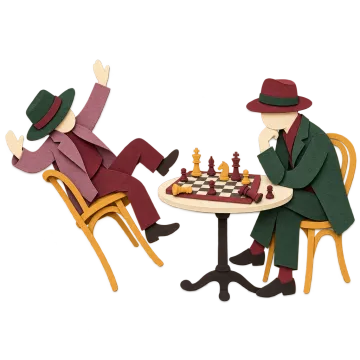
A Provocateur tests everyone, early and without much subtlety. Most people respond by getting quietly hurt, by conceding, or by treating the challenge as rudeness — and all three end the audition, not because the Provocateur judges them for it but because the mode this type most wants is now unavailable. The people who push back, hold their ground, and are visibly enjoying it get promoted immediately and stay promoted for decades.
A Provocateur being polite to you is a worse sign than a Provocateur telling you your idea is nonsense.
This is the single most consistently misread thing about the type, and it costs them relationships with people who would have been excellent friends and who concluded, reasonably, that they were disliked.
What this type is like as a friend
Generous with attention and unreliable with logistics, in roughly equal measure.
On the good side: a Provocateur will think seriously about your problem, and their thinking is worth having. They will connect your situation to something completely unrelated and be right about it. They do not judge — this type is genuinely close to unshockable, which makes them the person friends tell the things they are ashamed of. And they will take your ambitions seriously enough to interrogate them, which almost nobody else does, most people preferring the easier kindness of encouragement.
On the other side: they will forget your birthday, arrive late, cancel because something more interesting happened, and go quiet for four months. None of this is a statement about how much they value you, and all of it is experienced by the other person as exactly that.
How this type loses friends
Three ways, none of them intentional, in descending order of frequency.
The point scored in company. A Provocateur will win an argument at a dinner table without noticing that the other party was not playing, and that seven people watched. This is the type’s most expensive social habit. Being right in front of an audience at a friend’s expense costs more than any single point is worth, and this type is genuinely poor at pricing it because the argument itself felt collaborative from where they were sitting.
The accumulated small wound. Comfort with conflict means no mark is left on this side of it. The friend has been thinking about a remark for a fortnight; the Provocateur does not remember making it. Over years these accumulate quietly into someone who is warm in person and no longer calls.
Simple drift. This type does not maintain, and does not need to be maintained, and generalises from that. A friendship that ran on the Provocateur’s enthusiasm ends when the enthusiasm moves somewhere else — which it does, without any decision being made, and often to the surprise of the Provocateur when they resurface eighteen months later and find the temperature has changed.
What they are unusually good at
Worth stating, because the failures above are loud and these are not.
Provocateurs are extremely good in a friend’s genuine crisis. The situation is interesting, the rules are suspended, and improvisation is the required skill — all of which is this type at their best. A friend who has just blown up their life will find a Provocateur is not embarrassed, does not need managing, will say the true unhelpful thing and then the true useful one, and is entirely willing to be practical at two in the morning.
They are also the friend who changes the shape of your thinking. Most people confirm what you already believed. This type will tell you your plan is wrong, argue the case properly, and then help you build the better one — and a lot of people can name a Provocateur as the reason they did not take a job, or did take one, ten years ago.
Keeping them, if you have one
Two things, both slightly counterintuitive.
Argue back. This type is not being aggressive and does not want to be handled carefully. A friend who engages gets more of the good version; a friend who goes quiet gets a Provocateur who becomes gradually more careful and eventually somewhat bored.
And do the maintaining yourself. It is genuinely not personal. A Provocateur who has not been in touch for six months will pick up mid-sentence, be delighted, and have thought about you more than the silence suggested. If waiting for them to initiate is a condition of the friendship, the friendship will end, and it will end over something neither person would have chosen.
One thing to watch for this week: think of the last time you won an argument with a friend in front of other people. Ask whether you have checked, since, that it was fine. If the answer is that it obviously was, that is exactly the assumption this page is about.