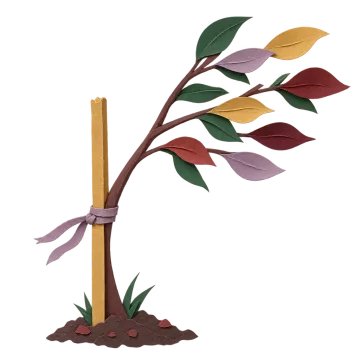
Resilience is the process and capacity to adapt, recover, and keep functioning during or after difficulty. It can involve regaining some stability, seeking support, changing plans, making sense of what happened, or continuing with a manageable challenge.
Being resilient does not mean staying positive, avoiding distress, recovering quickly, or handling everything alone. Sometimes it means building a different workable life rather than returning to exactly how things were. Persistence may help in one situation; pausing, asking for help, or leaving unsafe conditions may be the more useful response in another.
Resilience, coping, recovery, and growth are not the same
These concepts overlap, but they describe different parts of responding to difficulty.
| Concept | Main focus | Everyday example |
|---|---|---|
| Coping | Managing immediate demands | Asking for help with childcare |
| Resilience | Adapting during and after difficulty | Adjusting responsibilities while finding support |
| Recovery | Regaining workable functioning | Gradually resuming meals and routines |
| Post-traumatic growth | Possible positive change following trauma | Developing a new sense of purpose |
Coping refers to what you do to manage a demand or your response to it. After losing a job, you might divide the paperwork into smaller tasks or call someone who can help you understand your options. A coping action may provide immediate relief without resolving the larger problem.
Resilience describes the broader process of responding and adapting over time. That might involve managing the initial shock, finding financial assistance, revising plans, and eventually establishing a sustainable routine.
Recovery is movement toward workable functioning. After bereavement, returning to regular meals or being able to concentrate on a conversation may be part of recovery. It does not require feeling exactly as you did before the loss.
Post-traumatic growth refers to positive changes that some people report after struggling with traumatic experiences, such as changed priorities or deeper relationships. It is not universal, required, or evidence that the experience was beneficial.
Someone can adapt to a loss without finding a positive lesson in it. Likewise, getting through today with practical help can matter even when longer-term recovery still feels distant.
Five capacities that resilience can involve
One useful way to understand resilience is to separate it into five capacities. These are not a universal formula or five requirements you must meet. They help make a broad concept more concrete.
1. Recovering after strain
Recovery can start with regaining enough stability to resume one necessary routine.
After a difficult week, this might mean preparing a meal, getting some rest, or returning an important call. The relevant question is not “Am I completely fine?” but “What level of functioning is possible now?”
Rest may be enough after an unusually busy day. After a major loss, recovery may require sustained support and substantial changes to responsibilities.
2. Identifying people you can call
Support might come from a friend who listens, a colleague who shares a task, a community service that provides transport, or a professional who offers informed guidance.
Different needs call for different people. A caring friend may help you feel less alone but may not know how to handle a housing dispute. Being able to identify the right source of help expands your options.
Having limited support describes your circumstances, not your character.
3. Making sense of difficulty
Making sense of an experience means identifying what happened, what matters now, and what is or is not within your control.
After a rejected application, for example, you might distinguish between feedback you can use and a decision you cannot reverse. That is different from deciding that rejection proves you are incapable.
Some experiences remain confusing or unfair. Meaning-making does not require explaining everything or finding a silver lining.
4. Adapting when circumstances change
Adaptation means revising a plan when it no longer fits reality.
If a family member needs ongoing care, an earlier schedule may become unworkable. Renegotiating deadlines or sharing responsibilities may be more effective than trying to maintain every previous commitment.
Changing the route does not necessarily mean abandoning the goal. Sometimes, however, the goal itself needs to change.
5. Staying with manageable difficulty
Persistence can help when a task is meaningful, safe, and realistically achievable with practice or support.
A student might continue a demanding course while seeking feedback and trying a different study method. Continuing without sleep, necessary accommodations, or a workable workload is a different situation.
These capacities can develop unevenly. Someone may be good at revising plans but reluctant to ask for help. Another person may have strong support while finding it difficult to regain routines after a setback.
Why resilience changes across situations
Resilience depends on the interaction between a person and the conditions around them. It is not a fixed reserve of toughness that works identically everywhere.
Consider someone who handles predictable work pressure well. They know the procedures, have experienced colleagues, and can ask their manager to clarify priorities. After an unfamiliar relationship loss, those same resources may not transfer. They may struggle with uncertainty, disrupted routines, and the absence of their usual source of comfort.
That contrast does not make their earlier resilience unreal. It shows why context matters.
Factors that can influence adaptation include:
- Personal resources: health, energy, practiced skills, previous experience, beliefs, and the ability to manage emotional responses.
- Relationships: reliable support, shared responsibilities, and people who respond constructively when help is requested.
- Material conditions: money, time, housing, transport, manageable workloads, and access to healthcare.
- Social conditions: safety, culture, community connections, and freedom from discrimination.
A broken car may be an inconvenience for someone with savings and nearby public transport, but a threat to employment for someone without either. During grief, bereavement leave and help with meals may make daily functioning more possible. Even an ordinary stressful morning can feel different after adequate sleep than after several nights of caregiving.
When options are limited, “be more resilient” can miss the actual need. The missing resource may be childcare, a safer workplace, accessible care, or financial assistance rather than a different attitude.
Persistence is not always the most resilient response
Persistence is useful when it serves a worthwhile goal under workable conditions. Endurance alone is not evidence of resilience.
Continuing a challenge versus leaving harmful conditions
A student who finds a course difficult might speak with the instructor, adjust their study methods, and reduce other commitments. Continuing may make sense because the difficulty is manageable and the changes create a realistic path forward.
That is different from remaining in a learning or work environment involving threats, harassment, or demands that cannot be met safely. Seeking protection, changing environments, or leaving when feasible may be the more adaptive response.
Leaving is not always immediately possible. Financial dependence, caring responsibilities, or limited alternatives can constrain choices. In those situations, support and safety planning may matter more than pressure to make a quick decision.
Handling a setback alone versus involving others
Rescheduling a missed appointment may be something you can manage independently. A problem involving eviction, serious illness, or workplace safety may exceed one person’s knowledge, authority, or resources.
Before deciding to push through, ask:
- Does this goal still matter to me?
- Is the situation reasonably safe?
- Could adjustments or support make progress realistic?
- Is continuing creating escalating harm?
- Do I have meaningful options to pause or change course?
Resilience should not be used to pressure someone to tolerate abusive, exploitative, unsafe, or chronically unmanageable conditions.
What resilience does not look like
Resilience is not defined by appearing calm, cheerful, or unaffected. Visible distress and useful action can happen together.
- Crying while arranging help can be resilient. Someone might feel overwhelmed while organizing childcare, transport, meals, or professional support. Their tears do not cancel out the steps they are taking.
- Taking longer to stabilize does not establish weakness. Two people facing apparently similar losses may differ in health, safety, responsibilities, and available support. Their timelines are not directly comparable.
- Stepping away from an impossible demand can reflect adaptation. Declining an additional shift when you cannot safely manage it differs from avoiding every uncomfortable task.
Emotional suppression, constant positivity, immediate recovery, and complete independence are not requirements. Nor must you return unchanged to your previous life.
Pain, grief, uncertainty, and periods of reduced functioning can coexist with resilient responses. A composed appearance tells you little about someone’s resources or what it costs them to keep going.
How resilience can be strengthened realistically
Strengthening resilience usually means building options, skills, and support. It does not mean becoming unaffected by hardship.
Start with small stabilizing routines
Choose one routine that could make the next day more manageable: a regular meal, an opportunity to sleep, gentle movement, or a limited return to an essential responsibility.
After a short period of strain, restoring familiar routines may help. During illness, grief, or unstable housing, those routines may need to be smaller or supported by other people. Access to rest and food is not simply a matter of discipline.
Build a support map
Identify who or what could help with different needs:
- Emotional support: someone who can listen without immediately giving advice.
- Practical help: someone who can assist with meals, transport, childcare, or a specific task.
- Informed advice: a qualified professional, workplace representative, or relevant community service.
- Emergency assistance: local services for urgent safety or medical needs.
Make requests specific when possible: “Could you take me to the appointment on Tuesday?” gives someone a clearer way to respond than “I need more support.” Developing assertiveness can help you reflect on how to communicate your needs, ask for support, and set reasonable boundaries while respecting other people’s choices.
If no one comes to mind, that identifies a gap worth addressing through available services or community connections, not a failure of character.
Give plans review points and alternatives
Instead of “I must make this work,” try: “I will use this approach for two weeks, then review the workload and ask what needs to change.”
For a manageable work project, that might mean reviewing progress with a supervisor. For ongoing caring responsibilities, it might mean arranging backup before the current plan becomes unsustainable.
A review point makes adjustment part of the plan rather than evidence that the plan failed.
Make room for meaning without forcing a lesson
Useful questions include:
- What has changed or been lost?
- What remains important to me?
- What is within my influence?
- What am I assuming that I do not yet know?
After a friendship ends, “This relationship mattered, and I am grieving it” may be more accurate than either “It was all pointless” or “This must have happened for a reason.”
You do not have to turn a painful experience into a positive story.
Practice persistence with limits
For safe, meaningful challenges, increase demands gradually. Someone returning to study might start with a short session, notice what made it workable, and adjust the next session.
Decide in advance what would signal a need to pause: worsening health, loss of essential rest, unsafe conditions, or no realistic progress despite reasonable adjustments.
Some problems require changes beyond individual effort. An unmanageable workload needs organizational attention. Persistent or worsening distress that interferes with daily life deserves a conversation with a qualified professional. Immediate danger calls for urgent local assistance. When prolonged workplace demands lead to exhaustion, emotional detachment, or reduced effectiveness, exploring burnout patterns through a self-reflection questionnaire may help you recognize concerns worth discussing with a qualified professional or workplace support service.
A five-question resilience self-check
Think about one recent difficulty rather than judging your whole life. Ask:
- After a setback, can I regain enough functioning to take one useful next step?
- Can I name at least one person, service, or community resource I could contact?
- Can I revise a plan when new facts show that the original approach is no longer workable?
- Can I identify what helps me understand or make sense of a difficult experience?
- Can I distinguish worthwhile persistence from endurance that is causing escalating harm?
Uneven answers are expected. You might know exactly whom to contact about a work problem but feel unsure where to turn after a personal loss. These questions are prompts for reflection, not a diagnosis or a pass-or-fail score.
For a more structured look at those differences, the Testfy Resilience Test offers an optional self-report profile covering recovery, people available to call, making sense of difficulty, adaptation, and staying with difficulty. It is intended for reflection, not a trauma diagnosis. A low support result points toward a resource gap, not a personal failing.
The useful next step is to identify one concrete need, such as practical help or a revised deadline, rather than assign yourself a fixed “resilient” or “not resilient” label.
What a resilience questionnaire cannot tell you
A self-report questionnaire reflects how you understand and describe your current patterns. It is not an objective measurement of inner strength.
Responses can be influenced by mood, recent events, question interpretation, honesty, culture, and changing circumstances. During an acute crisis, you may answer differently than you would after receiving practical support. You may also describe yourself differently when thinking about work rather than family life.
For example, struggling to plan while facing housing insecurity is not equivalent to struggling with an ordinary scheduling problem. Similar answers can arise from very different demands.
A resilience questionnaire alone cannot establish whether someone has experienced trauma, diagnose a mental health condition, guarantee recovery, or predict responses to every future adversity.
Distress or a low score should not be read as weakness, low worth, or proof that someone has failed to cope. The more useful interpretation is specific: “I currently have little practical support,” rather than “I am not strong enough.”
Common questions about resilience
Is resilience a trait or a skill?
It can involve personal tendencies and learnable skills, but it is best understood as a dynamic, context-dependent capacity and process. Planning skills may help with a disrupted project; they cannot replace safety, healthcare, or support during a serious crisis.
Does being resilient mean you do not feel upset?
No. Distress and effective adaptation can occur together. You might feel anxious before a difficult conversation while still preparing what to say and asking someone to support you afterward. Feeling calm is not a prerequisite for taking a useful step.
Is asking for help a sign of resilience?
Using appropriate support can be part of resilience because it expands your options. Handling a routine task independently may be practical; seeking advice about something outside your knowledge may be equally practical. Independence is not the standard against which every response should be judged.
Can resilience be learned?
Some contributing capacities can be practiced, including flexible planning, recognizing limits, asking for help, and managing emotional responses. What is possible also depends on health, safety, relationships, and material conditions. Practice may help someone handle manageable uncertainty, but it cannot make an unsafe environment safe.
When does persistence stop being helpful?
Persistence deserves reassessment when harm is escalating, safety is compromised, essential resources are depleted, or the goal or environment is no longer workable. Difficulty alone is not necessarily a reason to stop, but increasing effort is not automatically the answer.
A useful response to hardship is one that fits the actual situation: continuing when support makes progress possible, adjusting when circumstances change, and protecting yourself when the cost becomes too high.